|
|
Nic Low is a writer, installation artist and arts organiser of Ngai Tahu Maori and European descent. He divides his time between a hyper-social Melbourne sharehouse, and an anti-social bush retreat in the Castlemaine National Heritage Park.
Nic’s short fiction, essays and criticism have been published in Griffith Review, The Big Issue, Dumbo Feather, The Lifted Brow, Cordite, Art Monthly, Australian Book Review, The Press, the Sunday Star Times and various suspect anthologies. He is a recipient of the 2011 GREW Prize for non-fiction, and shortlisted for the 2012 Commonwealth Short Story Prize.
>> Nic’s full bio
The last six or eight months have been all about writing. Every second week I’m out of the city at my house in Barkers Creek – just me and the wallabies and a brain full of words.
 
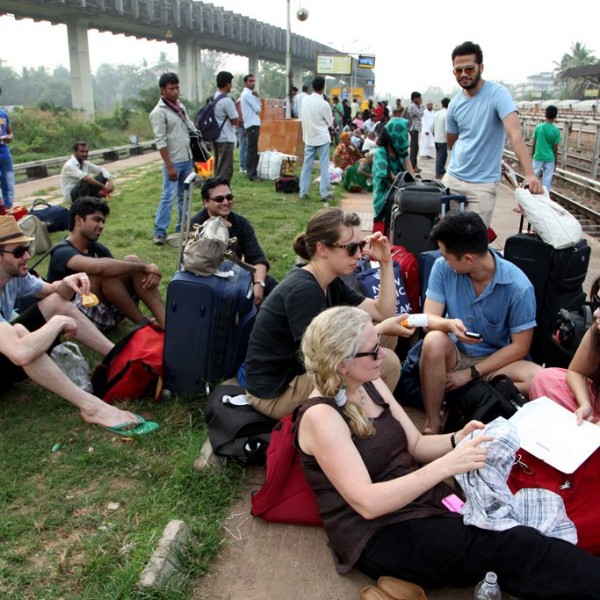
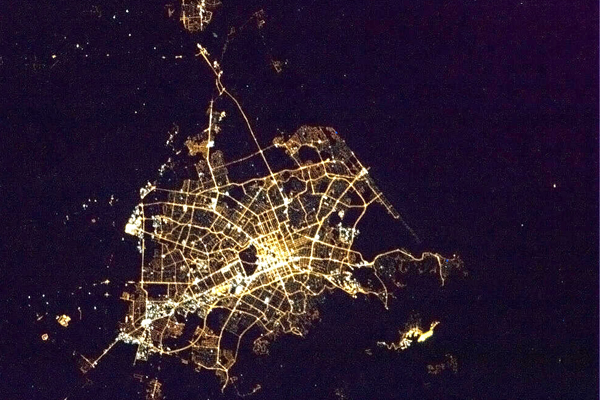
I’m writing short fiction – about terrorism and octopuses and the world’s most ambitious advertising campaign and a kid who’s the Shakespeare of online sex chat – and essays – the Christchurch earthquake, and gentrification / creativity / property booms / colonisation, and Korean underground culture, and travelling India by train – plus book reviews and the odd slab of art criticism. A few recent highlights:
GREW PRIZE
2011 GREW Prize for Non-Fiction
Awarded to the writer/s ‘whose work has been deemed most original and influential.’ The award includes a week-long residency, manuscript appraisal and mentoring.
EAR TO THE GROUND
‘Ear to the Ground’, Griffith Review 35: Surviving, February 2012.
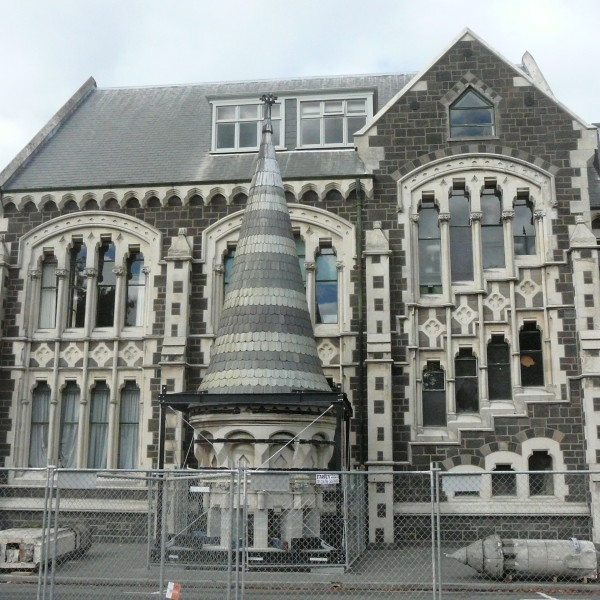
A long essay looking at the Christchurch earthquakes and their aftermath. What happens when a series of radical events strike a conservative place?
SUNDAY STAR TIMES
‘Ear to the Ground’ , Sunday Star Times (NZ), Sunday 19th February 2012.
A 2500 word extract from the longer Griffith Review essay, focussing on the destruction of Christchurch’s conservative heritage.
SLICK
‘Slick’, The Big Issue, Annual Fiction Edition , October 2011.
Short fiction about an oil slick, the world’s most ambitious advertising campaign and the Second Coming. Check out an extract published on Arts Hub.
OCTOPUS
‘Octopus’, Griffith Review, Annual Fiction Edition 34, December 2011
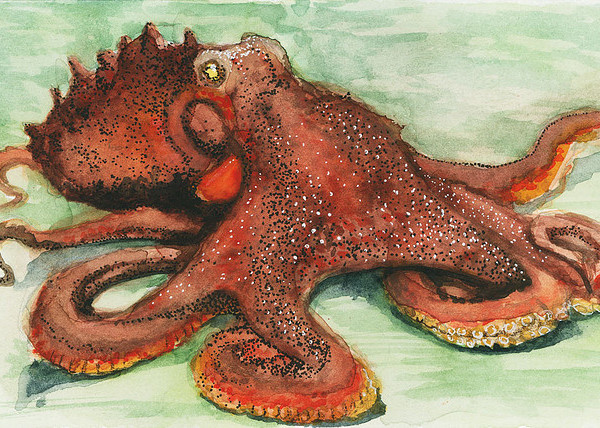
“Probably my favourite of the whole collection, Nicolas Low’s ‘Octopus’ , is set in New Zealand and cleverly combines Maori culture with fears of terrorism, fears of the outsider, and fears of an ancient, apocalyptic understanding.” – Bookseller + Publisher Magazine
“… a pleasingly diverse collection. Where Williams, Morgan and others use traditional narrative forms, others do not. Nicolas Low moves to more experimental registers in Octopus … Indeed, there is not a flat note in this collection. It shows us Australian contemporary fiction is in fine fettle.” – Weekend Australian
An interview about the genesis of ‘Octopus’: http://griffithreview.com/insight-in-the-mind-of-the-writer/interview-with-nicolas-low-author-of-octopus
PUNKASILA INDONESIA
 ‘ Punkasila Indonesia’, Art Monthly, issue 244, October 2011
Art, punk and politics contemporary Indonesia.
SEOUL CITY ROLLING
‘Balloon and Hyung-seok and Bo Yeon and Seoul city rolling’, Cordite Poetry Review, issue 35:2, August 2011.
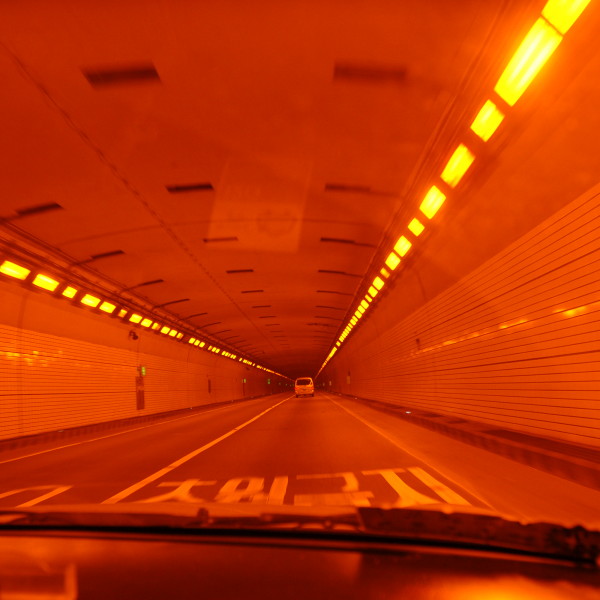
Reportage about a three-day, three-night tour of the underbelly of Seoul: red light districts, abandoned industrial precincts, Mongolian worker districts and the Gate of Corpses; and the resulting collaboration between Australian writers and Korean architects and designers.
ARTSTART 2011
2011 Art Start Grant from the Australia Council for the Arts
Funding towards a full year’s writing development. Incredibly useful!
DUMBO FEATHER
For the AMDF project, we’ve built a virtual future Tasmania. It’s a Google Earth-based data visualisation of what young Tasmanians think about tackling climate change in 80 years time. For each of the 100 year 5/6 students who completed our education kit and survey, we’ve built them a virtual future city. The x and y position of the city, plus its layout and composition, tell us what kind of future they want to live in.
-
-
-
Google Earth x y scatter graph
-
-
-
-
-
-
Click here to download the Google Earth file: (3.4mb – will take a minute or so to open once downloaded due to complexity)
Here’s how it works. Basically, we’ve taken an x-y-z scatter graph (first image in gallery above) and turned it into a map with a city for each point (second image in gallery above). The axis are as follows:
X-axis: Libertarian-Authoritarian. Cities on the west coast are libertarian-anarchist kids, where they want no government involvement in tackling climate change. It’s up to each and every individual to self-organise. Cities on the east coast are top-down, authoritarian societies. They will be sustainable, whether you like it or not. There’s a slight tendency towards libertarianism amongst our sample of kids.
Y-axis: Technology-Nature. Settlements up north represent kids who believe in a high-tech, high-energy future. They have a strong faith in science, technology and as-yet unimagined gadgets to solve climate change.
Z-axis: Optimism-Pessimism. The height of the city markers tell us the level of optimism that kid has about the future. Cities with higher markers show kids who are positive about our chances to tackle climate change – they feel we are well-informed, well prepared and able to adapt – while the lower ones are less than confident about our chances.
City layout: Libertarian – Authoritarian. This is a more visual representation of his data. Libertarian cities are built in a more dispersed, decentred pattern. The more authoritarian, the more centralised around a single point.
Building height: Nature – Technology. Higher buildings = higher emphasis on technology.
Programming and design for the system comes from NZ programmer Richard Procter, who has done an amazing job in taking a concept and turning it into a working dynamic system that generates the results based on whatever data we throw at it. It’s based on an L-system algorithm he wrote, one that essentially ‘grows’ the cities across the landscape of Tasmania – first roads, then building lots, then populates them with 3D buildings. Best of all, where we have two kids with similar ideas, the system grows their cities together to form a metropolis. In this way, we get larger settlements of people forming around common interests, which is in a way how real cities are formed. If you’re interested in finding out more about the system behind this project, email Richard at richard dot n dot procter at gmail dot com.
The diagrams below illustrate the gamut of cities the system can build in google earth. They are a sample; the computer tailors a unique layout to each child’s response. This is the technology-nature axis, represented as a spectrum of city plans:

Building on the above to include the Libertarian-Authoritarian axis, the two sequences below illustrate the four extremes: the top left is natural/libertarian, and the bottom right, high tech/authoritarian. Click to enlarge.


The data for the project was generated by a survey designed by sustainability psychologist Tim Cotter of Awake and delivered to schools by Nadine Kessler, Josie Hurst and Heidi Douglas. The same data was used to create the AMDF installation – see here for photos
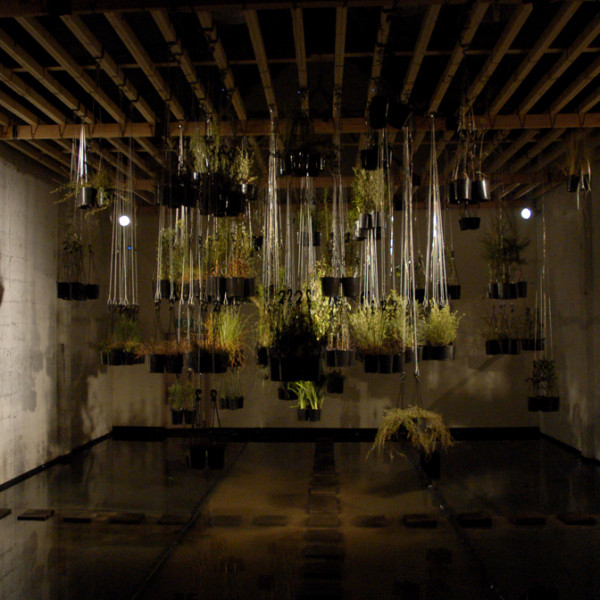
I’ve just returned from the Junction 2010 Arts Festival, where we had a glorious and exhausting time building the AMDF installation. 10 straight days of painting, building, rigging, hanging, lighting and flooding to create a data visualisation installation – in the form of a hanging garden of 400 native Tasmanian plants. Check the installation guide and some initial photos:
A winter update on some recent and upcoming projects …
Map of a Dream of the Future – Education Kits
The education team on AMDF have been working like crazy, and I’m stoked to say that our climate change education kits are now out in schools. They feature a narrative exploring what life might be like for kids in 2090, a heap of artistic and imaginative exercises for teachers, and a statistical survey developed with climate change psychologist Tim Cotter. You can check it out and download a copy here.
I’m working with plant experts, a structural engineer and a kick-arse production team from the Junction 2010 Festival on the installation venue, and programming genius Richard Proctor and I are collaborating on some mad L-system algorithms for dynamically generating statistically-driven cities in Google Earth. Good things happening!
Text Camp – Next Wave Festival
Next Wave kicks off next week and it looks like it’s going to be yet another incredible couple of weeks. Check the program here.
I’m stoked to be running the Creative stream of the Text Camp project this year, mentoring five writers in the quest to find strange and intriguing ways of responding to the events, artists and ideas behind the Festival. I’m also giving a couple of public workshops on creative and in particular risk- and intervention-driven approaches to writing and art. They’re on the 17th and 18th of May and there are still a few places left. Find out more and register here.
I’m also going to be DJing in the Festival Club – come down for some NZ-influenced hiphop and broken beat.
Darwin Nights
I’m heading to Darwin next week for the NT Wordstorm Writers Festival to present a great evening of stories from the South East Asian region. On Wednesday 12 May at the Indonesian Garden, Charles Darwin University from 5-7pm Asiaink’s Writing Program presents music, stories and poetry from Indonesia, Singapore, Sri Lanka and Timor-Leste. Featuring Lily Yulianti Farid, Iyut Fitra, O Thiam Chin, Isa Kamari, Cancio Soares, Sharanya Manivannan. $15/$10 (includes refreshments) Book online if you’re in the neighbourhood.
A Map of a Dream of the Future (AMDF) is my new contemporary art project, commissioned for the Junction 2010 Australian Regional Arts Conference. Based around a collective re-imagining of Tasmania’s future, it aims to stimulate, document and express the thinking of a generation of young Tasmanians about climate change and island sense of place. It is a public installation, an online environment, and a State-wide community-based art and education program.
 Map of a Dream of the Future - concept 1
Through workshops and an artistic education kit distributed to Tasmanian schools, young Tasmanians are invited to envisage how they want their lives and communities to look in response to climate change.
The results – images, stories, ideas and detailed statistical data – are collected and displayed as part of a virtual online future Tasmania, as designed by its young people.
The project is presented to the public as a contemporary art installation that uses sophisticated data-visualisation to map young people’s dreams about the future. The installation is both a surreal and beautiful experimental garden, and a huge three-dimensional graph that shows the spread of young Tasmanians’ thinking about climate futures.
For more information about the project, check it out here: A Map of a Dream of the Future
I’m excited to say that the CRACK performance art and experimental theatre program I commissioned and curated as part of This Is Not Art (TiNA) has taken on a life of its own. In 2009 Crack will appear at TiNA as a fully-fledged festival in its own right, led by the eminently capable David Finnigan and Gillian Schwab, along with Thomas Henning of the Black Lung Theatre and Whaling Firm. Crack is a national festival and forum for Australia’s theatre and performance artists, and promises several days of inspiring performances, panels, workshops and several godawful experimental messes to boot.
Just as exciting is the news that the Spat+Loogie and Willoh S Weiland piece Newcastle Pie-off that was commissioned for the 2007 Crack program will be remounted as part of the MCA in Sydney’s 2009 Primavera exhibition.
Where it started: Crack 2007. After organising the 2007 festival within an inch of its life, I commissioned four performance collectives and four writers to disorganise, crash, remix, subvert or disrupt the festival in any way they wanted. The end results were a superb mixture of clever intervention and utter psychosis, giving festival-goers (and directors) a slightly harrowed look as they waited for the next act of total weirdness.
“Ingeniously anticipating criticisms that TINA might have become dangerously institutionalised or formulaic, a number of artists were tasked to perform interventions designed to disrupt the efficiency of the festival. Dressed in beige military get-up, collaborative group Brown Council took aim at TINA’s ambiguous identity, instituting their own splinter event, the This IS Art Festival. Throughout the weekend they could be found (clipboard folders in hand) inspecting presentations and workshops for signs of legitimate “art.” But perhaps the most wildly disruptive interventions were the terror(art)ist antics of Melbourne’s Black Lung Theatre. Ambushing one unsuspecting panel discussion, two performers raided the stage and gaffa-taping, stripping, urinating and urine drinking ensued. Whether or not this organised anarchy was entirely successful in every instance, it was indispensable as an affirmation of the healthy future of TINA. It seems to me that any festival that is conscientiously concerned with its own undoing is not in danger of forfeiting its life-force anytime soon.” – Dominique Angeloro, RealTime Arts 82, December 2007.
I’ll post up some images and a PDF of the program book here when I get a chance to make a low-res version.
Role: program initiator and curator 2007, 2008; festival founder 2009.
Website: Crack: experimental and independent theatre and performance art festival
Grab your elephant gun and go hunting for the elusive Open Office for an Editorial Committee. It’s a herd of nomadic furniture, a portable, self-powered, open-air magazine office, manned by trusty Voiceworks staff and open to all. Submit work now for inclusion in the NYWF 07 anthology, then work in the office to help select, edit, design and print the thing. Find out what goes into making a magazine by petting one in the wild!
Open Office for an Editorial Committee was a collaboration with Makeshift (the amazing Tessa Rapaport and Karl Logge) and the writers, editors and designers of Voiceworks Magazine, in particular Ryan Paine and Marc Martin. We joined forces to create a nomadic, open-air magazine office operating for 3 days as part of This is Not Art / NYWF. Staffed by the Voiceworks crew, the office set up shop in Newcastle’s Civic Park each afternoon of the festival, inviting the public to actively participate in producing and publishing the NYWF 07 anthology. On the final day, the office was converted into its own unique stall at the Zine and Independent Press Fair, where it distributed copies of the finished anthology.


Part performance, part collaborative magazine publication and part public sculpture, this living installation attracted a range of curious visitors interested in taking part in (or just observing) various aspects of the publication process, from producing their own submissions at purpose-built typewriter and cut-and-paste stations, to selecting content and organising layout at the picnic/conference table.
Audiences were also drawn into engaging with the space by the interactive nature of the office itself, consisting of a collection of hybrid objects clustered together in the dappled sunlight, shifting and changing configuration as new participants joined in, sprinklers were turned on, winds picked up, or production of the zine progressed to a new stage. These ambiguous, DIY objects were hand-made by hijacking familiar everyday artefacts (BBQs, trolleys, suitcases, picnic tables etc.) and transforming them into (mostly) functional travelling workspaces that enable a different way of using the city and its shared public spaces.
Role: collaborative commissioning of the concept, project management.
Partnership between: myself, the NYWF, Makeshift and Voiceworks. This project was assisted by Next Wave and the Australian Government through the Australia Council.
Website: @ Makeshift
Thanks to: Makeshift for photos and text.
| pen Office for an Editorial Committee was conceived of in collaboration with the National Young Writers’ Festival, who in early 2007 invited us to produce a nomadic, open-air magazine office operating for 3 days as part of This is Not Art. Staffed by a team of capable young writers, editors and designers from Voiceworks magazine, the office set up shop in a cosy corner of Newcastle’s Civic Park each afternoon of the festival, inviting the public to actively participate in producing and publishing the NYWF 07 anthology. On the final day, the office was converted into its own unique stall at the Zine and Independent Press Fair, where it distributed copies of the finished anthology.
Part performance, part collaborative magazine publication and part public sculpture, our living installation attracted a range of curious visitors interested in taking part in (or just observing) various aspects of the publication process, from producing their own submissions at purpose-built typewriter and cut-and-paste stations, to selecting content and organising layout at the picnic/conference table. |
|
|
 |
udiences were also drawn into engaging with the space by the interactive nature of the office itself, consisting of a collection of hybrid objects clustered together in the dappled sunlight, shifting and changing configuration as new participants joined in, sprinklers were turned on, winds picked up, or production of the zine progressed to a new stage. These ambiguous, DIY objects were hand-made by hijacking familiar everyday artefacts (BBQs, trolleys, suitcases, picnic tables etc.) and transforming them into (mostly) functional travelling workspaces that enable a different way of using the city and its shared public spaces.
Open Office for an Editorial Committee was a collaboration between NYWF, Tessa Rapaport & Karl Logge (Makeshift), Voiceworks and Urchin. This project has been assisted by Next Wave and the Australian Government through the Australia Council. |
 |
 |
Read about Open Office in The Program |
|
 |
Hola! I’ve started posting more travel writing to Nomadology in the last few weeks, with a lot more coming. I’ve spent the last five months on the road, in NZ out bush then in Thailand, Laos and Cambodia with my brother Tim. Stories are over here, and photos are here.


And now that I’m back in Melbourne I’ve got two big new projects on the go. I’m now running the Asialink Literature Program, responsible for sending amazing Australian writers on residencies to different Asian countries, as well as jacking up book and author tours, publishing and translation projects, exhibitions and the like.
And I’m super excited to have landed a 15-month commission working as lead artist on a large-scale installation project for the 2010 Australian Regional Arts Conference in Launceston. It has a working title of A Map of a Dream of the Future, and centres around Tasmanian sense of place, climate change and resilience. We’re still in the conceptual stages at this point and don’t have a web presence yet, but it’s taking shape very quickly – over-excited details will be up here in the next couple of months.

In 2007 and 2008 I had the pleasure and privilege of co-directing the Australian National Young Writers Festival, the country’s biggest, rowdiest and most rigorous meeting of young, emerging and experimental literary minds. The NYWF takes place as part of the This Is Not Art (TiNA) festival, which adds independent musicians, journalists, artists, performers, activists, nerds and lovers-of-ginger-beer to the mix. It’s a combination of cutting-edge performances, panels, collaborations, experiments, workshops and parties. It’s unique because it’s aimed at an audience of creative practitioners, and not passive consumers. There are no spectators, with thousands of people making the pilgrimage from all over Australia for a five-day creative bender. Most of the guests and audience are in the 20-35 age bracket; far from the seas of white hair, book signings and celebrity author worship you might expect, the NYWF is a DIY, hands-on conversation between equals.
 Image by schizophonia
The NYWF in 2007 featured 95 events and 230 guests, among them novelist Alice Pung, graphic novelist Shaun Tan, journalist and writer Anna Funder, freelance guru Anna Krien, Melbourne’s brilliant Black Lung Theatre, Sydney’s Brown Council and Post, Charles Firth from The Chaser, award-winning indigenous Darwin artist Chayni Henry, Adelaide columnist Clementine Ford, playwright David Mence, Young Novelist of the Year, Tasmanian Danielle Wood, Puberty Blues author Gabrielle Carey, senior Australian historian Henry Reynolds, blockbuster writer James Phelan, poet Judith Beverage, Brisbane artist Krista Berga, poet Sam Wagan Watson, and hundreds more.
It was a huge job curating this many artists and projects, but the results were utterly worth it. We explored the politics of telling other people’s stories, ran a literary journalism boot camp, put senior journalists in a room with the anarchist activists they write about in their papers, ran a huge DIY academy and NYWF 101 workshop series to get people making and doing on the spot, hooked up with international literary artists via video link, put on plays in local cafes, threw a massive balkan gypsy wedding party, read steamy late-night erotica, staged the country’s biggest independent press and zine fair, exhibited graphic art and comics from all over the country, and helped people stop writing their first novel.
Link: full NYWF 2007 program
Link: fully NYWF 2007 artist list
 Photo by Aggy K
Some highlights from our 2007 program were:
Shaun Tan Masterclass: so well attended we had to change the venue and format to allow everyone access. Shaun presented on his creative process in conversation with Nicki Greenberg, the ethics and politics of representation in his work (Untold Stories), and spent the rest of the weekend hanging out with audiences and working on a series of collaborative panels with other artists upstairs in the Festival Club.
Smarter than your Average Bogan: White trash is the new black. From cashed-up bogans to Howard’s battlers, everyone wants a bit of bogue up ‘em. Join some of Australia’s most articulate white-trash they discuss stubbies, alcoholism, sluts, unions and other finer points of bogan culture. This one involved drinking UDLs, flashing tits, and a hugely heated discussion of class, pretention and self-image in Australian writing. Unlike anything she’d ever seen at a writers’ festival, Anna Funder wrote a great column about it in The Monthly.
Speechless: Spoken word gets mashed with sound and lights at the NYWF cross-platform performance showcase. From cross-dressing sound poetry bunnies to full-frontal audience intimidation, join Australia’s most innovative show-offs as they push the boundaries of what can be done with a microphone. Sam Wagan Watson and rising NT star Leah Flannigan got things going with intimate poetry and song, while Perth’s Tomas Ford tried to literally make love to the audience.
Independent Press and Zine Fair: Bring your wallet, your picnic blanket and cool things to swap down to Civic Park for Australia’s largest Zine and Independent publishing fair. Be delighted by table after table of amazing home-grown writing, illustration, comics, zines, badges, posters and more. Kick off with the spoken word champagne breakfast at 11am. Share your skills and learn some new ones at the DIY academy. Be punished for your writing sins with the Bad Writing PinÃta of Cathartic Shame. Or just bask in the sunshine and enjoy the afternoon of free entertainment on the Zine Fair stage.
Artextart Exhibition: Far from the bleak expanse of the blank page, words are spilling from the mouths, canvases, screens and speakers of contemporary Australian art. NYWF and Electrofringe present a nation-wide exhibition of visual, installation and sound art which takes and transforms the word. Discover the madness of life in a Darwin housing commission, find desire in the erasure of old books, control your world through Braille or lose yourself in the sound of words under extreme pressure. Come explore the intersection between language and form as we highlight the vibrancy of this exciting movement in contemporary art.
Mega Mega Launch: See the Festival Club transformed into the biggest small press showcase in the Southern hemisphere – and possibly anywhere, ever! Thirty-five publications will be launched at lightning speed: upstairs, downstairs, even under the stairs. Expect champagne, giveaways and spotlight-grabbing shenanigans. Run in the style of an award ceremony, this was a rapid-fire celebration of a huge range of exciting new books from around Australia’s vibrant independent and small press publishing scene. Amazing to see that many proud publishers and writers together in one place to cheer each other on.
Shooting the Messenger: Writing is a powerful expression of resistance. Presented by Sydney PEN, this discussion features authors who have experienced direct censorship. It looks at the current state of press freedom both internationally and closer to home, and what happens to dissenting voices in Australia. One of the closing sessions of the festival, this was highly anticipated and well attended, with extensive discussion from the floor. With sobering stories of direct experience from Abdul Hekmat and Mohsen Soltany Zand, plus clear analysis from Sarah Maddison, it gave excellent insight into how people have dealt with censorship in their own lives.
Radio Locus: Radio Locus is an immersive, site-specific sound project, generated through a series of recording, writing and editing workshops and broadcast via a swarm of custom-built micro-radios. Enter the field, write and record work on site, considering location through the lens of words and sounds, or the inverse. Recordings to be edited to contribute to the audio Pool and used for the Radio Locus broadcast mix.
CRACK: Melbourne’s anarchic Black Lung Theatre joins twisted Sydney geniuses Brown Council, Spat+Loogie and Post with four emerging writers to fulfil a highly dubious mission: disrupt the NYWF. Expect daily attacks on the smooth running of the festival – it could be fake discussion panels, fire-alarm evacuation dances or visits from the anti-terror squad. Except it won’t be. But when the volatile mix of theatre, video and sound finds you, you’ll know about it. This was one of the absolute highlights – I’ll post the specifics of this one on this blog.
Open Office for an Editorial Committee: Grab your elephant gun and go hunting for the elusive Open Office for an Editorial Committee. It’s a herd of nomadic furniture, a portable, self-powered, open-air magazine office, manned by trusty Voiceworks staff and open to all. Submit work now for inclusion in the NYWF 07 anthology, then work in the office to help select, edit, design and print the thing. Find out what goes into making a magazine by petting one in the wild! Again, another highlight that deserves its own entry. Stay tuned!
 Photo by Schizophonia
 Photo by Comics Lifestyle
Co-workers and partners in organisational crime: Kelly-lee Hickey, Tom Doig, Brea Acton, Laura McKay, Kelly Chandler, Rachel Morley, Andrew Morgan, Jadan Carroll, Brigitte Lewis, Tom Rigby, Ianto Ware, Kate Patterson
As well as working on curating the festival, running the organisation, sourcing its funding, overseeing its marketing and promotion and looking after a whole bunch of staff, I also built us a great big fat website. Just for something to do on the weekends!
Some more photos: search for This Is Not Art on Flickr.
|
|